
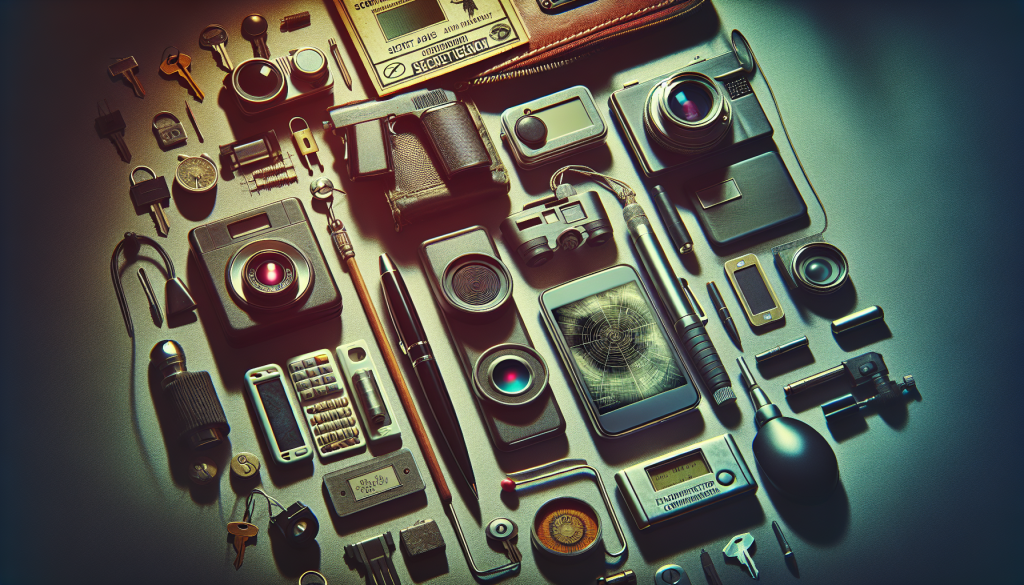
Imagine stepping into a world where ordinary objects conceal extraordinary secrets. In “The Secret World of Spy Tools,” you will be enthralled by a fascinating realm where everyday items transform into powerful tools of espionage. From ingenious hidden cameras disguised as innocent household objects to sophisticated listening devices cleverly tucked away in inconspicuous locations, this captivating article unveils the clandestine world of spy technology. Brace yourself for a thrilling journey as you uncover the incredible capabilities of these covert gadgets and gain a glimpse into the extraordinary world of spies.
Surveillance Tools
Hidden Cameras
Hidden cameras are one of the most common surveillance tools used by professionals for covert operations. These small cameras are designed to be disguised as everyday objects or positioned in inconspicuous locations to capture video footage without raising any suspicion. From pens and clocks to wall outlets and smoke detectors, hidden cameras can be found in various shapes and sizes. These devices are invaluable for conducting undercover investigations, monitoring surroundings, and gathering crucial evidence discreetly.
Audio Bugs
Audio bugs, also known as listening devices or wiretaps, are used to secretly capture conversations and audio recordings. These covert surveillance tools come in a variety of forms, such as miniature microphones or transmitters that can be concealed within everyday objects. Audio bugs enable surveillance operatives to gather critical information by eavesdropping on targeted individuals or locations discreetly, making them an essential tool for intelligence gathering and law enforcement.
GPS Trackers
GPS trackers are sophisticated devices that use Global Positioning System technology to determine the precise location of a person, vehicle, or object. These small and discreet trackers allow for real-time or historical tracking by transmitting location data to a receiver or a web-based platform. GPS trackers are widely used by law enforcement agencies, private investigators, and even parents to monitor the whereabouts of their loved ones. With their ability to provide accurate and up-to-date location information, GPS trackers have revolutionized surveillance and tracking operations.
Phone Tapping Devices
Phone tapping devices are used to intercept and monitor telephone conversations without the knowledge or consent of the parties involved. These devices are generally installed on telephone lines or connected directly to mobile devices, allowing for the interception of both incoming and outgoing calls. Phone tapping tools are often used in the field of intelligence gathering and law enforcement to gather evidence, gather intelligence, and prevent criminal activities. However, their use is strictly regulated and requires proper authorization due to privacy concerns.
Cyber Surveillance Tools
Keyloggers
Keyloggers are software or hardware devices used to monitor and record keystrokes on a computer or mobile device. These surveillance tools enable individuals to collect sensitive information, such as passwords, login credentials, and confidential messages. Keyloggers can be installed discreetly, making them a popular choice for hackers, spies, and individuals seeking unauthorized access to personal or classified information. However, it is important to note that the use of keyloggers without proper authorization is illegal and a serious violation of privacy.
Remote Access Trojans (RATs)
Remote Access Trojans, commonly known as RATs, are malicious software designed to provide unauthorized remote access and control over a targeted device. These powerful surveillance tools allow attackers to monitor and manipulate files, access cameras, record keystrokes, and even control the entire system remotely. RATs are often employed for malicious purposes, such as data theft, espionage, and unauthorized surveillance. Protecting one’s devices from RATs involves employing robust cybersecurity practices, including regularly updating software, using strong passwords, and being cautious of suspicious links and attachments.
Password Crackers
Password crackers are tools used to decrypt or bypass password protection on various digital devices, such as computers, mobile phones, or encrypted files. These surveillance tools are commonly employed in forensic investigations or intelligence operations to gain unauthorized access to confidential information. However, it is crucial to recognize that using password cracking tools without proper authorization is illegal and can result in severe consequences.
Spyware
Spyware refers to software that is installed on a device without the user’s consent to gather information and monitor activities. This surveillance tool can record keystrokes, capture screenshots, track browsing habits, and even activate the device’s microphone and camera. Spyware is often used for malicious purposes, such as stealing sensitive information, monitoring online activities, or conducting unauthorized surveillance. Protecting one’s devices from spyware requires utilizing reliable antivirus software, regularly updating software, and being cautious when downloading files or clicking on unfamiliar links.
Covert Communication Devices
Cryptographic Systems
Cryptographic systems are used to secure and protect sensitive information by encoding it in a way that can only be deciphered by authorized parties. These communication tools employ complex mathematical algorithms to ensure the confidentiality, integrity, and authentication of data. Cryptographic systems are essential for covert communication, intelligence agencies, and military operations, where safeguarding classified information is paramount.
Invisible Ink
Invisible ink, also known as secret ink, is a covert communication method that involves using substances that are not readily visible under normal lighting conditions. This surveillance tool allows messages to be written or printed with the ink and later revealed using specific methods, such as heat, chemicals, or ultraviolet light. Invisible ink has been utilized throughout history by spies, intelligence agencies, and individuals wanting to exchange secret messages discreetly.
Microdot Technology
Microdot technology involves the use of extremely small images or text that are barely visible to the naked eye. These microdots can be embedded in documents, objects, or even on the skin, allowing for the covert transmission of information. Microdot technology is particularly useful for intelligence gathering, as it allows for the discreet storage and transfer of critical data, even in seemingly harmless items or inconspicuous locations.
Disguise Kits
Fake Moustaches and Beards
Fake moustaches and beards are essential components of disguise kits used by undercover operatives. These covert accessories enable individuals to alter their appearance quickly and effectively, masking their true identity and allowing them to blend into different environments. Whether it’s a handlebar moustache, a full beard, or a soul patch, these prosthetic pieces provide an extra layer of anonymity, making it more challenging for others to recognize the wearer.
Voice Alteration Devices
Voice alteration devices are tools used to modify a person’s voice to sound different from their natural tone. These covert gadgets are commonly used by spies, undercover agents, or individuals seeking to protect their identity during covert operations. Voice alteration devices can range from simple voice changers to more advanced technology that can mimic specific voices or alter speech patterns. By changing the pitch, tone, or accent, individuals can effectively disguise their voice and avoid recognition.
Impersonation Tools
Impersonation tools are essential components of disguise kits and are used to imitate someone else convincingly. These tools can include realistic masks, prosthetics, wigs, and even visual aids, such as contact lenses or colored lenses. By transforming one’s appearance, impersonation tools allow individuals to assume the identity of another person, deception specialists, intelligence operatives, and actors often utilize these tools to gain access to restricted areas or gather sensitive information while remaining undetected.

Interception Tools
Signal Jammers
Signal jammers are electronic devices used to disrupt or block signals from various communication devices, such as cell phones, GPS trackers, or Wi-Fi networks. These surveillance tools are often employed to prevent unauthorized communication, thwart remote detonation of explosives, or protect sensitive areas from unwanted transmissions. Signal jammers are utilized extensively by law enforcement agencies, military organizations, and security personnel to maintain control over communication channels and protect against potential threats.
Radio Frequency Detectors
Radio Frequency (RF) detectors are specialized devices used to detect and locate the presence of RF signals and transmissions. These interception tools are crucial for identifying hidden surveillance devices, such as audio bugs or wireless cameras. By scanning the surrounding area, RF detectors can alert individuals to the presence of unauthorized transmissions or surveillance equipment. RF detectors are integral to counterintelligence operations, ensuring sensitive information remains secure and covert activities are not compromised.
Tracking Devices
Nano GPS Trackers
Nano GPS trackers are miniature tracking devices that provide real-time location data with a high level of accuracy. These discreet devices can be concealed almost anywhere, from clothing to personal belongings, allowing for covert tracking of individuals, vehicles, or assets. Nano GPS trackers are commonly used in law enforcement, private investigations, and even by concerned parents who want to monitor the safety and whereabouts of their loved ones. The compact size and long battery life of these trackers make them highly efficient and versatile surveillance tools.
Pigeon Cameras
Pigeon cameras, also known as avian aerial surveillance, are unique tracking devices that have been used for covert surveillance since the early 20th century. In this method, a camera is attached to a homing pigeon, allowing it to capture aerial images or film specific locations during flights. Pigeon cameras were historically utilized for military reconnaissance, intelligence gathering, or collecting information in areas where traditional surveillance methods were limited. Although less common today, pigeon cameras remain a fascinating piece of surveillance history.
Analysis Tools
Forensic Software
Forensic software refers to specialized tools used to analyze and extract evidence from digital devices, such as computers, mobile phones, or storage media. These analysis tools enable investigators to uncover hidden or deleted information, recover passwords, and reconstruct digital activities. Forensic software plays a vital role in modern surveillance, helping to gather crucial evidence for legal proceedings, intelligence investigations, and cybersecurity operations.
Steganography Detection Tools
Steganography detection tools are designed to identify hidden messages or data concealed within seemingly harmless files, images, or communication channels. Steganography is a covert communication technique that involves embedding information within the structure or content of another file, making it difficult for unauthorized individuals to detect. These detection tools play a crucial role in identifying potential threats, uncovering hidden messages, and safeguarding against covert communication in the digital realm.
Counterintelligence Tools
Deception Devices
Deception devices are specialized tools used to mislead or deceive individuals engaging in surveillance activities. These counterintelligence tools can include decoy documents, false identities, or even devices that mimic the functionality of authentic surveillance equipment. By deploying deception devices, individuals can confuse or deter would-be surveillance operatives, protecting sensitive information or covert operations from unwanted attention.
Bug Detectors
Bug detectors are electronic devices designed to identify and locate hidden audio and video surveillance devices. These counterintelligence tools help individuals detect and neutralize the presence of bugs, wiretaps, or hidden cameras within a given space. By sweeping the area and detecting electromagnetic signals emitted by surveillance equipment, bug detectors play a pivotal role in ensuring privacy and confidentiality in sensitive areas or during important discussions.
Surveillance Countermeasures
Surveillance countermeasures refer to the strategies, techniques, and tools employed to detect, mitigate, and deter unauthorized surveillance activities. These countermeasures involve implementing physical, technical, and operational measures to protect against eavesdropping, data breaches, or unauthorized monitoring. Surveillance countermeasures can include encrypting communications, conducting regular security audits, practicing situational awareness, and utilizing secure communication channels to maintain confidentiality and protect against potential threats.
Intelligence Gathering Tools
Satellite Imaging Systems
Satellite imaging systems are critical intelligence gathering tools that utilize satellites to capture high-resolution images of the Earth’s surface. These systems provide valuable visual data for various purposes, including mapping, environmental monitoring, disaster management, and military reconnaissance. Satellite imaging technology plays an integral role in surveillance, enabling analysts to gather information from remote or inaccessible locations without physical presence.
Drone Surveillance
Drone surveillance involves the use of unmanned aerial vehicles (UAVs) equipped with cameras or sensors to monitor and gather intelligence. Drones can capture aerial footage, conduct reconnaissance missions, and provide real-time situational awareness from an elevated vantage point. These intelligence gathering tools have revolutionized surveillance operations, allowing for cost-effective and adaptable monitoring in various contexts, including law enforcement, border control, and search and rescue operations.
Weapons and Non-lethal Tools
Cyanide Tooth
A cyanide tooth, often associated with espionage, is a covert device concealed within a false tooth that contains a small amount of a lethal substance, such as hydrogen cyanide. Designed as a last-resort measure, this tool enables individuals to consume the poison in case of imminent capture or interrogation, preventing the divulging of sensitive information. However, it is important to note that the possession or use of such lethal tools is illegal and highly dangerous.
Dart Guns
Dart guns, commonly used by law enforcement or in special operations, are non-lethal weapons designed to immobilize or incapacitate a target by administering tranquilizers or sedatives. These surveillance tools allow for the safe apprehension of suspects or individuals posing a threat without causing permanent harm. Dart guns are carefully regulated and typically only used by trained professionals in specific situations.
Self-defense Devices
Self-defense devices, such as pepper sprays, stun guns, or personal alarms, serve as non-lethal tools for protection in a variety of situations. While not exclusively associated with surveillance, these devices can be used by individuals, including surveillance operatives, to enhance personal safety and security. In potentially dangerous or hostile environments, self-defense devices can provide a means of defense or deterrence without resorting to lethal force.
In conclusion, the world of spy tools encompasses a broad range of surveillance, intelligence gathering, counterintelligence, and self-defense tools. From hidden cameras and audio bugs to cryptographic systems and satellite imaging, these tools cater to the needs of various professionals involved in covert operations. While some spy tools may seem straight out of a Hollywood movie, it is important to remember that the use of such tools should always adhere to applicable laws, regulations, and ethical considerations. Ultimately, the secret world of spy tools continues to evolve, adapting to advancements in technology and the ever-changing landscape of surveillance and intelligence operations.


