
In this fascinating article, you will uncover the world of covert surveillance equipment and the secrets they hold. From tiny cameras disguised as everyday objects to sophisticated tracking devices, this hidden eye technology is designed to gather information discreetly. Get ready to be amazed and intrigued as we unveil the inner workings of these covert tools, shedding light on the elusive realm of covert surveillance.

The Art of Covert Surveillance
Understanding Covert Surveillance
Covert surveillance refers to the use of hidden cameras, audio devices, GPS trackers, and other specialized equipment to gather information or monitor individuals discreetly. The objective is to observe and record activities without the knowledge or consent of those being monitored. Covert surveillance can be employed by various entities, including law enforcement agencies, private investigators, businesses, and even individuals. It involves the utilization of sophisticated tools and techniques to ensure stealth and gather valuable intelligence without detection.
The Importance of Covert Surveillance
Covert surveillance plays a crucial role in numerous fields and industries. Law enforcement agencies rely on covert surveillance to gather evidence for criminal investigations, monitor potential threats, and maintain public safety. Private investigators employ covert surveillance to uncover evidence of infidelity, gather information for legal disputes, or conduct corporate espionage investigations. In the business sector, covert surveillance aids in identifying employee misconduct, preventing theft, and protecting intellectual property. Moreover, individuals may utilize covert surveillance to safeguard their homes, monitor children or elderly family members, or address personal concerns.
Common Uses of Covert Surveillance Equipment
Covert surveillance equipment serves a wide range of purposes, both in professional and personal settings. Hidden cameras are frequently utilized to monitor areas of interest, such as homes, offices, or public spaces. Audio surveillance devices allow for discreet recording of conversations and sounds. GPS trackers enable the tracking of vehicles or individuals in real-time. Spyware and malware can be employed to remotely monitor computer activities. Covert listening devices aid in capturing audio without arousing suspicion. Wireless video transmitters transmit video signals covertly. Covert recording devices offer discreet audio or video recording capabilities. Infrared cameras are utilized for nighttime surveillance. Cell phone surveillance techniques allow the tracking of mobile devices. Covert tracking devices enable the monitoring of individuals’ movements without their knowledge. These diverse tools and technologies provide the means to gather crucial information discreetly.
Types of Covert Surveillance Equipment
Hidden Cameras
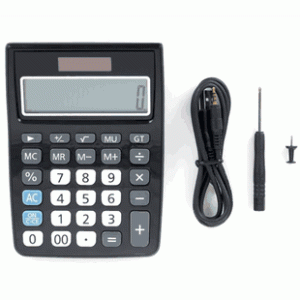
Hidden cameras are perhaps the most well-known and commonly used form of covert surveillance equipment. These miniaturized cameras can be disguised as everyday objects such as clocks, pens, or even smoke detectors. They enable discreet video capture and can be placed in various locations to monitor activities without alerting the subjects being observed. Some hidden cameras also feature motion activation, allowing them to start recording only when movement is detected.
Audio Surveillance
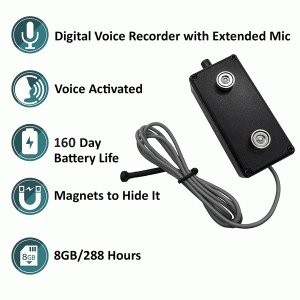
Audio surveillance devices come in various forms, including miniature microphones, voice recorders, and parabolic microphones. These devices allow for the covert recording of conversations and sounds without being easily detected. They are often utilized by law enforcement agencies, private investigators, and businesses for gathering evidence or gathering information discreetly.
GPS Trackers
GPS trackers are compact devices that utilize Global Positioning System (GPS) technology to accurately track the location of vehicles or individuals in real-time. These trackers can be discreetly attached to a vehicle or personal belongings, such as bags or clothing, to monitor movement. They provide valuable data on routes, speed, and stops, making them useful tools for law enforcement agencies, businesses, and individuals seeking to track vehicles or ensure the safety of loved ones.
Spyware and Malware
Spyware and malware refer to malicious software that can clandestinely monitor and collect information from personal computers or electronic devices. While the use of spyware and malware is generally associated with unethical or illegal activities, certain organizations, such as law enforcement agencies, may utilize these tools with proper legal authorization to investigate criminal activities. It is crucial to use these technologies responsibly and within the boundaries defined by the law.
Covert Listening Devices
Covert listening devices, also known as bugs or wiretaps, are designed to capture audio discreetly. These devices can be planted in various locations, such as rooms or vehicles, to record conversations without the knowledge of those being observed. Covert listening devices have been used by law enforcement, intelligence agencies, and private investigators for surveillance purposes, but their use must comply with legal requirements.
Wireless Video Transmitters
Wireless video transmitters allow for the covert transmission of video signals without the need for physical connections. These devices can transmit video captured by hidden cameras to remote monitoring systems, enabling real-time observation without detection. They are commonly used in law enforcement operations, private investigations, and even home surveillance setups.
Covert Recording Devices
Covert recording devices, such as miniature digital audio or video recorders, are employed to discreetly capture audio or video evidence. These devices are conveniently portable and can be camouflaged as everyday objects, making them difficult to spot. Covert recording devices find applications in law enforcement investigations, undercover operations, and personal security setups.
Infrared Cameras
Infrared cameras, also known as night vision cameras, are designed to capture images in low-light or no-light conditions. By utilizing infrared technology, these cameras can produce high-quality images even in complete darkness. Infrared cameras serve as essential tools in law enforcement, security operations, and surveillance scenarios that require nighttime monitoring.
Cell Phone Surveillance
Cell phone surveillance involves monitoring and extracting information from mobile devices without the knowledge or consent of the user. This includes tracking the device’s location, intercepting communications, accessing stored data, and even remotely activating the microphone or camera. Cell phone surveillance can be utilized by law enforcement agencies as well as malicious actors, highlighting the importance of securing personal devices against potential breaches.
Covert Tracking Devices
Covert tracking devices are discreet devices that employ GPS technology to track the movements of vehicles or individuals. These devices are often used by law enforcement agencies, private investigators, and individuals concerned with personal safety or asset protection. Covert tracking devices offer real-time location data and are particularly effective in recovering stolen property or monitoring the activities of individuals under suspicion.
Characteristics and Features
Miniature Size and Disguises
Covert surveillance equipment is specifically designed to be small and inconspicuous, allowing it to blend seamlessly into the environment. Hidden cameras can be disguised as ordinary objects or embedded within common items such as buttons, pens, or smoke detectors. This miniature size and discreet appearance enables covert monitoring without arousing suspicion.
High-resolution and Low-light Capabilities
Many covert surveillance devices feature high-resolution cameras and advanced lens technology, ensuring that the captured images or videos are clear and detailed. Additionally, specialized devices, such as infrared cameras or night vision cameras, have the ability to operate effectively in low-light conditions, enabling surveillance in dark or dimly lit areas.
Long Battery Life
To ensure uninterrupted surveillance, covert surveillance equipment often incorporates long-lasting batteries or power-saving features. This allows the devices to operate for extended periods without requiring frequent battery changes or recharging. Long battery life is crucial, particularly in situations where continuous monitoring is necessary.
Remote Access and Control
Technological advancements have enabled many covert surveillance devices to offer remote access and control capabilities. This allows users to monitor or retrieve data from the device remotely, reducing the need for physical presence and minimizing the risk of detection. Remote access features enhance convenience and provide greater flexibility in surveillance operations.
Motion Activation and Alerts
Many covert surveillance devices come equipped with motion activation sensors. These sensors enable the devices to start recording or transmitting data only when motion is detected within their field of view. Motion activation features conserve storage space, reduce the amount of irrelevant footage, and alert the user to potential activities of interest.
Audio and Video Quality
Covert surveillance equipment strives to capture high-quality audio and video recordings. The advancement of technology has led to devices with enhanced resolution, improved audio clarity, and the ability to capture fine details. High-quality audio and video recordings are essential for clear identification, analysis, and documentation of events as evidence.
Wireless Connectivity
Wireless connectivity is an essential feature of many covert surveillance devices, facilitating easy setup, remote access, and efficient data transmission. It allows users to connect and control devices using smartphones, computers, or other compatible electronic devices. Wireless connectivity simplifies the surveillance process and expands the range of applications for covert surveillance equipment.
Easy Installation and Portability
Covert surveillance equipment is designed to be user-friendly, allowing for easy installation and operation. Many devices can be quickly deployed or concealed in various locations, providing flexibility and versatility. Portability is a crucial characteristic, enabling surveillance equipment to be easily transported and used in different settings or scenarios.
Data Storage Capacity
Efficient data storage capabilities are vital for covert surveillance equipment. Devices often utilize removable memory cards or built-in storage to capture and retain recordings. Adequate data storage capacity ensures that valuable footage or audio recordings are not lost and can be accessed and reviewed as needed.
Durability and Resilience
Covert surveillance equipment must be durable and resilient to withstand various environmental conditions and potential tampering attempts. Equipment designed for outdoor use, such as GPS trackers or infrared cameras, should possess waterproof or weather-resistant features. Additionally, devices should be constructed using sturdy materials to ensure longevity and protect against accidental damage.
Legal and Ethical Considerations
Surveillance Laws and Regulations
The use of covert surveillance equipment is subject to specific laws and regulations that may vary depending on the jurisdiction and purpose of surveillance. It is crucial to consult relevant local, state, and federal laws to ensure compliance. Legal requirements often include obtaining proper authorization, ensuring proportionality, and respecting individuals’ privacy rights.
Privacy and Consent Issues
Covert surveillance raises significant privacy concerns, as it involves the monitoring of individuals without their knowledge or consent. It is important to consider the ethical implications and potential infringements of privacy rights when utilizing covert surveillance equipment. Consent must be obtained whenever legally required, and privacy should be respected to maintain trust and fairness in surveillance operations.
Ethical Use of Covert Surveillance Equipment
The ethical use of covert surveillance equipment involves employing it solely for legitimate purposes defined by law. Authorized use should adhere to strict guidelines, ensuring that surveillance is necessary, proportionate, and conducted with the utmost respect for privacy rights. Proper ethical conduct promotes the responsible and accountable deployment of covert surveillance equipment.
Outlawed Uses and Penalties
Certain uses of covert surveillance equipment are deemed illegal and carry severe penalties. Engaging in unauthorized surveillance, invasion of privacy, or using surveillance equipment for illegal activities can result in criminal charges, fines, and other legal consequences. It is essential to understand the legal boundaries and abide by the prescribed laws to avoid breaking the law and facing potential penalties.

Effective Deployment Strategies
Choosing the Right Equipment for the Task
Selecting the appropriate covert surveillance equipment is crucial for effective monitoring. Consider the specific objectives, environmental factors, and legal requirements when choosing the devices to be used. Assess the features and capabilities of different equipment options to ensure they align with the desired surveillance goals, providing the necessary functionality and reliability.
Proper Placement and Concealment
The success of covert surveillance heavily relies on proper placement and concealment of surveillance equipment. Strategic placement ensures optimal coverage and minimizes the risk of detection. Devices must be concealed in a manner that prevents suspicion or tampering. Consider factors such as line of sight, ambient noise, lighting conditions, and the potential movement of subjects to achieve adequate coverage.
Monitoring and Data Retrieval Systems
Having an efficient monitoring and data retrieval system is essential for surveillance operations. Real-time monitoring systems allow for immediate observation and response when necessary. Devices should be integrated with recording or storage mechanisms that enable easy retrieval and analysis of captured data. Implementing a secure and organized data management system ensures efficient data handling and maximizes the usefulness of the surveillance equipment.
Ensuring Security and Countermeasures
Covert surveillance equipment must be protected from unauthorized access or tampering. Implement security measures, such as password protection, encryption, and physical security, to safeguard the devices and the data they capture. Additionally, consider potential counter-surveillance techniques employed by adversaries and take steps to mitigate their effectiveness.
Training and Procedures for Operation
Proper training and adherence to established procedures are vital for effective deployment of covert surveillance equipment. Users should undergo comprehensive training on the operation, maintenance, and legal aspects of the equipment. Detailed procedures should be established to guide the setup, placement, and retrieval of equipment, ensuring consistent and standardized surveillance practices.
Counter-Surveillance Techniques
Recognizing Covert Surveillance
Recognizing signs of covert surveillance is essential for protecting privacy and security. Look out for suspicious behavior, unexplained equipment or changes in the environment, and unusual noises that could indicate surveillance attempts. Regular physical inspections or sweeps can help identify hidden cameras, listening devices, or other covert surveillance equipment.
Detecting Hidden Cameras and Bugs
Hidden cameras and bugs can be challenging to detect, but certain methods can help uncover their presence. Sweep the area with a radio frequency detector to identify signals emitted by wireless cameras or listening devices. Use visual inspection techniques to look for lens reflections, irregularities, or unusual wiring that may indicate the presence of a hidden camera.
Jamming and Signal Blocking
Jamming or signal blocking techniques can disrupt the operation of covert surveillance equipment. Signal jammers emit radio frequency interference, preventing wireless devices from functioning properly. However, it is important to note that interfering with signals is generally illegal and should only be done with proper authorization and knowledge of the law.
Anti-Spyware and Anti-Malware Measures
Protecting electronic devices with anti-spyware and anti-malware software is crucial in preventing unauthorized surveillance or hacking attempts. Regularly update and scan devices to detect and remove potential threats. Being proactive in maintaining device security helps safeguard against the installation of spyware or malware that may compromise privacy.
Physical Inspections and Sweeps
Conducting regular physical inspections and sweeps of the areas you wish to protect can help uncover covert surveillance devices. This involves thoroughly examining rooms, objects, or vehicles for signs of tampering, hidden cameras or microphones, and other monitoring equipment. Rigorous inspections ensure that privacy is maintained and counter risks associated with covert surveillance.
Risks and Dangers
Invasion of Privacy
One of the primary concerns regarding covert surveillance is the potential invasion of privacy. Monitoring individuals without their knowledge or consent can infringe upon their fundamental rights, erode trust, and breed resentment. It is crucial to strike a balance between protecting personal safety or security and respecting individuals’ privacy rights.
Misuse and Abuse
Covert surveillance equipment can be misused or abused when employed for unauthorized purposes or by individuals with malicious intent. Misuse may include stalking, harassment, or collecting information for blackmail or extortion. It is essential to ensure that covert surveillance equipment is solely used for lawful and ethical purposes to prevent harm and abuse.
Potential Legal Consequences
Engaging in unauthorized surveillance or violating privacy laws using covert surveillance equipment can lead to severe legal consequences. Individuals or organizations found guilty of illegal surveillance may face criminal charges, hefty fines, and reputation damage. It is vital to understand and comply with the legal restrictions and obtain proper authorization when conducting surveillance activities.
Security and Hacking Vulnerabilities
Covert surveillance equipment, particularly those utilizing wireless connectivity, may be susceptible to security vulnerabilities or hacking attempts. Unauthorized access to the equipment or intercepted communication poses significant risks, as it could compromise the confidentiality of surveillance operations or expose sensitive data. Employing robust security measures is essential to protect against such threats.
Negative Impact on Trust and Relationships
The use of covert surveillance equipment can have a profound impact on trust and relationships, both among individuals and within organizations. If the monitored party discovers they were under covert surveillance, it can lead to strained relationships, breach of trust, and legal conflicts. It is essential to weigh the potential consequences and consider alternative methods before resorting to covert surveillance.
Covert Surveillance in the Digital Age
Role of Technology in Covert Surveillance
Technological advancements have significantly shaped the field of covert surveillance. From miniaturized cameras to sophisticated tracking devices, the evolution of technology has made covert surveillance equipment more accessible, effective, and discreet. Wireless connectivity, data storage capacities, and advanced features have revolutionized surveillance capabilities, providing new avenues for monitoring and information gathering.
Cyber Espionage and Government Surveillance
Covert surveillance has expanded into the digital realm, with cyber espionage and government surveillance becoming prevalent issues. Covert surveillance techniques are increasingly utilized by governments and intelligence agencies to monitor individuals, gather intelligence, or combat cyber threats. The digital age has created new challenges and complexities in determining the boundaries of surveillance and protecting personal privacy.
Online Privacy and Tracking
In the digital age, individuals’ online privacy is increasingly at risk due to the widespread collection and tracking of personal data. Online platforms, social media, and various digital services employ covert surveillance techniques to monitor user behavior, track preferences, and serve targeted advertisements. Individuals must be aware of the implications and take steps to protect their online privacy.
Digital Threats and Countermeasures
The digital advancements that enable covert surveillance also introduce new threats. Malicious actors can exploit vulnerabilities in digital systems to conduct unauthorized surveillance, steal sensitive information, or compromise privacy. Countermeasures such as encryption, strong passwords, and cybersecurity protocols are essential in protecting against digital threats and maintaining privacy in the digital age.
Emerging Technologies and Future Trends
The field of covert surveillance continues to evolve with emerging technologies and future trends. Artificial intelligence, facial recognition, and machine learning are revolutionizing surveillance capabilities, offering enhanced capabilities and automation. Emerging technologies present both opportunities and challenges, requiring continuous ethical and legal discussions to navigate their implications effectively.
Famous Cases and Controversies
Edward Snowden and NSA Surveillance
Edward Snowden’s revelations regarding the extensive surveillance programs conducted by the National Security Agency (NSA) shed light on the scale and reach of government surveillance. Snowden’s disclosures sparked a global debate on privacy rights, government surveillance, and the balance between security and individual freedoms.
Wikileaks and Government Leaks
Wikileaks, an international non-profit organization, gained prominence for publishing classified government documents. The leaked documents offered insights into covert surveillance programs, government policies, and controversial practices. These disclosures sparked debates on government transparency, surveillance accountability, and the role of whistleblowers.
Corporate Espionage and Data Breaches
Cases involving corporate espionage and data breaches highlight the risks associated with covert surveillance. Covert surveillance techniques such as infiltrating organizations, monitoring communications, or stealing intellectual property pose significant threats to businesses. Companies must be proactive in implementing security measures to safeguard against these risks.
Celebrities and Paparazzi
In the realm of personal privacy, celebrities often fall victim to invasive covert surveillance by paparazzi seeking to capture intimate or compromising moments. The exploitation of celebrity privacy raises questions regarding ethical boundaries, media responsibility, and the need for legal protections to ensure the privacy rights of public figures.
Illegal Surveillance Scandals
From scandals involving unauthorized surveillance by government agencies to instances of individuals engaging in illegal surveillance of personal acquaintances, there have been numerous high-profile cases showcasing the misuse and abuse of covert surveillance equipment. These scandals emphasize the importance of addressing legal and ethical considerations to prevent privacy violations.
Protecting Yourself from Covert Surveillance
Personal Privacy Practices
Adopting personal privacy practices is essential in safeguarding oneself from covert surveillance. This includes being mindful of one’s online presence, using secure communication channels, regularly updating passwords, and being cautious about sharing sensitive information. Maintaining privacy-conscious habits helps protect against potential surveillance threats.
Physical Security Measures
Implementing physical security measures is crucial for protecting against covert surveillance attempts. Ensure the security of your premises by using sturdy locks, maintaining adequate lighting, and installing security cameras. Physical security measures act as deterrents and provide a level of protection against unauthorized surveillance.
Cybersecurity and Encryption
In the digital age, robust cybersecurity practices are indispensable for protecting one’s privacy. Utilize encryption tools, regularly update software, use strong passwords, and avoid insecure networks. These measures enhance the security of personal devices and protect against malicious surveillance attempts.
Anti-Surveillance Apps and Tools
The market offers a variety of anti-surveillance apps and tools designed to detect and counteract covert surveillance attempts. These tools can range from radio frequency detectors to apps that scan for hidden cameras or listening devices. Utilizing such technology can provide an added layer of protection and peace of mind.
Know Your Rights
Understanding your rights regarding privacy and surveillance is crucial. Research and familiarize yourself with the laws and regulations related to surveillance in your jurisdiction. Knowing your rights empowers you to take necessary action if you believe your privacy has been violated and helps you make informed decisions regarding your personal security and privacy.
In conclusion, covert surveillance equipment plays a significant role in various scenarios, ranging from law enforcement investigations to personal security measures. Understanding the different types of covert surveillance equipment, their characteristics, legal and ethical considerations, effective deployment strategies, and potential risks can aid in responsible use and decision-making. As technology continues to advance and surveillance practices evolve, it is crucial to maintain a balance between security needs and privacy rights to ensure a harmonious and transparent society.