
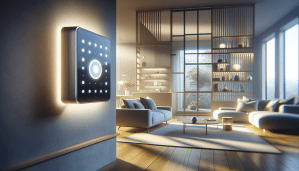
What if your home could sense your movements and adapt to your needs more intelligently than ever before? As technology advances, the realm of smart homes is rapidly evolving, bringing remarkable innovations in motion detection that promise to enhance your living experience.

The Rise of Smart Homes
In recent years, you may have noticed that your home has become smarter with devices that connect and communicate through the internet. Smart homes allow you to control everything from lighting to heating with just a click or a voice command. At the core of this transformation is motion detection technology, which serves as the brain for many smart devices, learning your preferences and patterns for optimal performance.
Understanding Motion Detection
Motion detection refers to the ability of devices to recognize movement in a particular area. This technology is fundamental for security systems, lighting control, home automation, and even energy management. By sensing motion, your smart devices can respond accordingly, creating an environment that reacts to your presence.
The primary types of motion detection technologies include:
-
Passive Infrared Sensors (PIR): These sensors detect changes in infrared radiation caused by the movement of warm bodies, such as humans and pets. They are widely used in security systems due to their low power consumption and reliability.
-
Ultrasonic Sensors: Utilized in more advanced applications, these sensors emit sound waves and measure their reflection to detect motion. They can cover larger areas compared to PIR sensors.
-
Microwave Sensors: Similar to ultrasonic sensors, microwave sensors use electromagnetic waves to detect motion. They can penetrate walls, making them effective in certain scenarios.
-
Video Motion Detection (VMD): This technology analyzes video feeds from security cameras, recognizing patterns and changes in the scene to detect movement.
How Motion Detection Works
Understanding how motion detection technology works can provide insight into its capabilities.
-
Detection Zone: Motion detectors have specific zones where they can perceive movement. Depending on the type of sensor, the coverage area can vary significantly.
-
Sensor Activation: When motion is detected, the sensor activates a pre-programmed action, such as turning on lights or sending alerts to your smartphone.
-
Data Adaption: Many modern motion detection systems utilize machine learning algorithms to adapt to your usage patterns over time. For example, they can learn when you typically come home and adjust settings accordingly.
Benefits of Motion Detection in Smart Homes
Incorporating motion detection technology into your smart home offers a variety of benefits that enhance convenience, security, and energy efficiency.
Enhanced Security Features
Safety is a primary concern for homeowners, and motion detection significantly boosts security.
-
Intrusion Alerts: With smart cameras and PIR sensors, motion detection can instantly notify you if an intruder is present. This can be particularly useful when you’re away from home.
-
Automated Lighting: Motion-activated lighting can deter potential intruders by illuminating entryways and driveways, signaling that someone is home.
Energy Efficiency
Smart homes can contribute to energy conservation through motion detection.
-
Lighting Control: By using sensors to automatically turn lights off when a room is unoccupied, you can substantially reduce energy waste.
-
Heating and Cooling: Advanced systems can adjust your home’s temperature settings based on detected occupancy, ensuring that energy is efficiently used only when needed.
Convenience and Automation
Motion detection allows for seamless automation that enhances your quality of life.
-
Hands-Free Experience: Imagine entering a room, and the lights automatically turn on. This level of convenience is possible with motion sensors.
-
Smart Assistants: Many smart devices integrate with virtual assistants like Amazon Alexa or Google Assistant. Motion detection enables these devices to respond intuitively to your presence.
Innovations in Motion Detection Technology
As technology continues to develop, exciting innovations are emerging in the motion detection field. Let’s look at some trending innovations that could reshape smart home experiences.
Integration of Artificial Intelligence
Artificial intelligence (AI) plays a crucial role in transforming motion detection.
-
Pattern Recognition: AI algorithms can analyze motion data over time, allowing devices to distinguish between familiar movements (such as family members) and unfamiliar ones (potential intruders).
-
Behavior Prediction: With machine learning, your home can predict your actions based on previous patterns. For example, if you usually watch television at a particular time, the system can prepare the living room accordingly.
Improved Sensor Sensitivity
Technological advancements are increasing the sensitivity and accuracy of motion sensors.
-
Multi-Sensor Systems: The use of multiple sensor types (such as PIR and ultrasonic) in concert can provide enhanced detection capabilities, reducing false positives and improving reliability.
-
Adjustable Detection Zones: Some systems now allow you to customize detection zones, making them suitable for various settings while ignoring irrelevant movements (like pets).
Smart Home Ecosystems
The integration of motion detection within comprehensive smart home ecosystems is becoming increasingly popular.
-
Device Interconnectivity: Motion sensors can trigger multiple devices simultaneously. For example, when you enter a room, the lights can turn on, the thermostat can adjust, and your favorite playlist can start playing.
-
Remote Management: With mobile apps, you can monitor motion detection alerts and control your devices remotely. This feature enhances security, allowing you to check on your home from anywhere.
Potential Challenges and Considerations
While motion detection technology offers numerous benefits, there are challenges and considerations to keep in mind.
Privacy Concerns
As homes become smarter, privacy issues may arise.
-
Unauthorized Access: If not properly secured, smart devices may be vulnerable to hacking. Regularly updating your passwords and using encrypted connections can help enhance security.
-
Data Usage: Motion data collected by smart devices can be sensitive. Knowing how this information is used and stored is essential for safeguarding your privacy.
System Compatibility
Not all motion detection systems are created equal.
-
Device Integration: Ensure that your motion sensors are compatible with other smart devices you have. This compatibility determines the effectiveness of your smart home ecosystem.
-
Update Compatibility: Regular software updates are crucial for maintaining compatibility with newer devices and repairing any vulnerabilities that may arise over time.
Future Trends in Motion Detection for Smart Homes
The future looks promising for motion detection in smart homes. A variety of trends may define the next frontier of this technology.
Advanced Machine Learning Applications
As machine learning algorithms become more sophisticated, the potential for enhanced functionality in smart homes grows.
-
Dynamic Adjustments: Future technology may enable even more intelligent adjustments based on not just motion but environmental factors like light levels or temperature.
-
Personalization: Imagine a system that not only detects motion but also learns and personalizes settings based on your preferences, making your home truly unique to you.
More Affordable Technology
As technology advances, costs tend to decrease.
-
Wider Adoption: Affordability will encourage more homeowners to invest in smart motion detection solutions, increasing the overall security and efficiency of homes.
-
Innovative Startups: Emerging companies are continually working on creative solutions for motion detection, often leading to breakthroughs that benefit consumers.
Conclusion
The future of smart homes lies in the innovations brought about by motion detection technology. With enhanced security, energy efficiency, and increased convenience, these advancements are set to transform how you interact with your living space.
While challenges such as privacy concerns and compatibility issues persist, the continuous evolution of motion detection offers exciting possibilities. Your home can already respond to your movements—imagine how much more intelligent and intuitive it will become as these technologies advance.
As you navigate the options for creating a smarter home, consider motion detection as a cornerstone for building a secure, efficient, and user-friendly environment. By embracing these innovations, you aren’t just adopting new technologies; you’re enhancing the way you live.